Posts Tagged ‘blog: musings’.

Happily Ever After, Even Now

Movies in which couples overcome various misunderstandings to eventually hug and kiss as the credits roll ask us to believe that their characters will be together forever.

So I got to thinking: assuming that the couples who get together at the end of movies stay together into the foreseeable future, what must they look like now? Surely they are still together, making coffee in the mornings, shuffling children off to this activity or that, taking trips to see plays and figuring out new digital cameras on the occasional Alaskan cruise.

I present the following as aids to your imagination, helping you to picture the lives of these fictional characters extended out ten, twenty, thirty years until the strange story of their first, accidental meeting is family legend retold every Thanksgiving to the grandchildren: “You know I used to fly Tomcats in the Navy — well, one day, Grandma waltzed into my classroom at Miramar, and I about flipped my lid. I told her about a MiG I’d seen recently, and she tried to freeze me out. And then I played volleyball for a while with Uncle Iceman.”

Remembering Frank Frazetta

Frank Frazetta died the other day. He was well-known as a the cover artist for innumerable Conan and Edgar Rice Burroughs books, but in truth, Frank was one of the greatest artists of the 20th century, working in oil paint or ink with equal facility. The excellent if rather showy retrospective documentary Painting With Fire is highly recommended, or for a more calculated explanation of why Frank was the best, here’s a neat blog post. My own experience with Frank’s work was very personal, and very formative.

For most of high school and my first year of college, I spent Wednesday afternoons after school with three other friends in an art studio in the San Bernardino mountains, taking lessons from a wonderfully talented illustrator named John Arthur. John was a classically-trained artist who drilled the basics of life drawing, line quality, and the importance of sketching into our still-mushy teenage minds, and I credit those Wednesdays with John with developing my creative instincts from childlike fumbling into something of value.

Every week, each of us would show John (and the others) any sketches or drawings we’d done throughout the week, but John also delighted in reading our stories, poems, comics or anything else we’d made — my friend Stephen was a prolific poet, I was working on a novel, both of us had occasional short stories to present as well, and John was always encouraging, always enthusiastic to see it all.

In return, John would teach us from the masters — as we drew in his studio, he’d read to us from Ray Bradbury or Robert Henri; as we listened, we sketched from life or copied (as best we could) from Michaelangelo, N.C. Wyeth, Bernie Wrightson or Frazetta.

Frank was John’s touchstone: to explain how light could turn a three-dimensional form into black and white lines, he’d pull out his old portfolio of Frazetta lithographs. He’d put an anatomy book next to one of Frank’s paintings to explain how to portray torsion in a muscle in an interesting and dynamic way, and compare and contrast Frank’s work with the schlocky Image comics we’d bring in for show-and-tell. And as we were packing up from the day’s lesson, John would tell the story of how Frank once goofed off playing baseball rather than working on a book-cover assignment, until the night before the painting was due to the publisher. That night, when he finally sat down to work, he discovered he didn’t have any canvas in the house — so he pried a piece of Masonite off the floor and painted monsters on it:

As wonderful as Frank’s paintings were and are, it was those lithos from John’s portfolio that always struck me the most. Mostly ink drawings from Tarzan books, they clearly showed Frank’s absolute mastery over the brush. The lines are lively, fluid, and variable in a way that John continually explored with us — they dance teasingly with negative space, volume, and texture. Frank’s linework is what’s playing in my brain every time I clumsily put pen (or brush) to paper today:

Having a variable quality of line was one of the lessons that John drummed into our drawing hands every single session. I admire cartoonists who can get evocative images out of Micron pens or thin strokes, but that came to bore me in my own art. Seeing what life Frank could breathe with his brush continues to inspire me today, and insofar as I’m anywhere, I wouldn’t be here without John, those Wednesdays, and Frank.


Frazetta, 1975


Me, 1996


Frazetta, 1969


Me, 1999

Thanks, Frank.

UPDATE: One more thing! During the time I was taking lessons from John, Frank suffered a stroke (what would be the first of many). John relayed the news to us gravely, and suggested that we call the family to wish them well. Next thing I knew, we were on the phone with Frank’s wife Ellie, each of us taking a moment to pass on our well wishes. I don’t know how John had the number — maybe they were listed in the phone book, or maybe he called the museum that Ellie had founded on their property. But it was a powerful moment in connecting with one’s heroes, remembering that for all their accomplishments, they’re people too.

After the stroke, Frank began to experience tremors and a loss of strength in his right hand. So what did he do? Taught himself to paint with his left. In his 70s. I just got done explaining how Frank was merely human, but dang if Frank didn’t try his best to make me a liar.

Ink-drawing images from Golden Age Comic Book Stories. Paintings from The Unofficial Frazetta Gallery Page.

Recommended reading:
Icon: A Retrospective by the Grand Master of Fantastic Art
Legacy: Paintings and Drawings by Frank Frazetta
Testament: The Life and Art of Frank Frazetta
Spectrum Presents: Frank Frazetta: Rough Work

2009 Errata

During our year-end review, we have discovered a number of factual errors in comics published in 2009. Please find our corrections below.

#567; O Selfless Saviors
It is an overstatement to say that no children have ever been poisoned by Halloween treats. In 1964, a woman handed out pellets of ant poison masquerading as treats; in 1974 a father gave his son a candy straw filled with cyanide. However, the man was using Halloween as a cover to kill his child, and the woman’s treats were clearly labeled and intended as a dark comment on the treat tradition. Thus, the point stands.

#526; In which it Hardly Matters
International Crossword Standards & Practices Union rules prohibit this pattern of blank squares from appearing in a regulation puzzle.

#523; In which Vince achieves Victory
Vince’s minor repair job did not actually require a wrench. It could have been accomplished with pliers.

#510; In which Rob tries to read
Rob also reads to earn fundraising pledges in his school’s Read-A-Thon.

#509; In which a Horn is overt
Sebastian did, in fact, take a lil’ blow. Just to see what would happen.

#485; The Australian Butler
Dinner was not actually ready.

Wondermark regrets the errors.

See also: 2008 Errata

Nice try, Pottery Barn

I was doing some Christmas shopping this week, trawling the ol’ mall, and discovered, in the charming little family-owned boutique known as Pottery Barn, a series of reproduction antique globes, carefully crafted with strange woods, metals and lines to give the impression of being “authentically old-timey” and thus interesting, but also brought fully and boringly up-to-date to reflect modern global political boundaries. These globes are now totally and utterly 100% accurate in every way.

nice. try.

oh wait

p.s. if you don’t get it

Notes from the Road

pack it up pack it in

I’ve been traveling this week! I was in Portland, then I was in Western Massachusetts inside the sinister obelisk that is TopatoCo World Headquarters, and now I’m in Boston. I am a California boy, and I am freezing here.

I have this feeling like I’ll look back at this point in my life and think, “Wow, I sure used to travel a lot.” I read about authors and musicians and athletes and other people who tour a lot, who have to stay in a lot of crappy hotels and ride on buses and fly coach and how they eventually get fed up with the hardship and the physical toll it takes on the body and just decide to start staying home. I hope that doesn’t happen to me; I hope our travel infrastructure makes improvements in comfort at at least the same rate that I get more decrepit and intolerant of the inconvenience.

And I cannot wait for the day when people in white coats come into my room at night, drug me and put me into a tube, and I wake up completely refreshed in New York a day later. If they will do that for me, I will even let them take embarrassing pictures of me while I am knocked out. I do not even care. I want it that bad.

I hope I get to keep traveling, because I love going to shows and events and meeting people and selling books and laughing and having a great time. I even love days like today, sitting in a café or hotel room with my laptop, connected to the world and putting in a satisfying full day’s work that I got to design.

I’m really excited about what’s happening at TopatoCo, and I’ve never been more sure that I made a smart move retiring from my “real” job at the beginning of this year. I’ve been self-employed for several years, taking odd freelance jobs here and there (usually editing movie trailers), but back in the spring I said “I don’t got time for this noise no more” and since then I’ve never looked back.

I get to develop comics and books and posters and cool stuff for myself, and I’ve also been working very closely with TopatoCo handling promotions and helping design books and other products for other artists. Today we launched a store for one of my favorite podcasters and a remarkable internet person in his own right, Jesse Thorn.

I’ve always been adamant that there’s no real difference between “webcomics” and “cool things on the internet in general”, and maybe the fact that I’m kind of an outlier in the “comics” world per se has helped me develop that perspective in a different way than some of my friends and colleagues who’ve got cartooning deep in their blood.

I forsee a future where a business model that we’ve sort of hammered out for webcomics can help bloggers, musicians, podcasters, writers, comedians etc. all develop sustainable careers by doing ridiculous things with computers.

CHARLES BABBAGE LOOK WHAT YOU DID

The Postmark Experiment

Every year, on April 15, I see long lines at the post office as people wait to send in their payment, and similarly at other times of year when corporate taxes and other deadline-specific filings come due. Now, most of these people are certifying or registering their mail, and thus require a visit to the retail counter. But last year I overheard the following exchange just as the post office was closing at 7PM:

CUSTOMER: I need to get this postmarked by today!

EXHAUSTED CLERK: No. We’re closed. You need to go to the main depot [8 miles away], they’re open till 11.

CUSTOMER: It’s already stamped! Can’t you just cancel the stamp for me? It’ll take two seconds!

EXHAUSTED CLERK: Sir, we’re closed. You need to go to the depot.

This was a person who didn’t need the added certainty of registered or certified mail; he just wanted to get his check out before the deadline. All he wanted was a postmark reading April 15.

While this exchange was occurring, I was staring directly at this:

This is the Automated Postal Center. It prints stamps. Stamps with dates on them.

My neighborhood post office has an APC in a 24-hour-accessible lobby. Before I got the Endicia system to print postage at home, I often went to the APC to mail packages in the middle of the night. Any stamp bought before midnight is printed with that day’s date.

One day I realized that all the packages I was mailing weren’t being processed until the following day, and thus their stamps were a full day old. This didn’t seem to be a problem — in fact, now, in the course of my business, I often print stamps on a Friday or Saturday that don’t get mailed until Monday, and I’ve never had any sort of problem.

And then came the day when I realized I hadn’t sent a rent check yet, and it was already the evening of the third — the last postmark day before my landlord charges a late fee. I was out running errands, so I stopped by the post office, printed a stamp from the APC, and took it home. The next morning (the fourth), I mailed the check — the idea being that as far as my landlord knew, it was mailed on time.

Let me repeat this for emphasis: Nobody knew that I hadn’t actually mailed the check on the day I was supposed to. I’ll also clarify that rarely had I ever seen APC stamps, especially on packages, be canceled — so, often, the only date on the envelope would be the date printed on the stamp.

So last April, as I watched the long lines of people wait to mail their taxes, I thought: How many days after April 15 could you still send a tax form with an April 15 stamp? In other words, could you print out an April-15 stamp, go home and finish your taxes, then actually mail the check a week later? Would that work? Or would there be an additional postmark added? Would the letter even arrive?

Let me take time out here for a sanity-check caveat. I am not suggesting that you mail your taxes late, or that this method is in any way reliable or a substitute for doing things correctly. Still, I was curious. So I did the following experiment:

On April 15 of this year, I went to my local APC at 10:30 PM, long after the actual post office had closed. My intent was to buy ten first-class stamps and mail them in succession, seeing how old the stamps would have to be before the letters would start being returned, as well as whether or not they would be canceled with an additional, dated postmark.

The APC has a few purchasing restrictions. One of them is that you can’t make a single purchase for less than a dollar. If you try to buy first-class stamps, it’ll default to a minimum purchase of a dollar rather than let you buy a 44¢ (or, at the time, 42¢) stamp. Anticipating this, I’d brought along a package that needed to be shipped, and bought that (two-dollar-something) stamp first. After that purchase, the APC asked if I’d like to charge something else to the same card, and I said yes. Because I did!

Another restriction is that you can only buy five stamps at a time for the same value. My intent was to buy ten, so I bought two batches of five:

Soon, I had ten first-class stamps, all dated April 15:

I figured that to really put these stamps to the test, I should send the letters to an address relatively far away — to make sure it went through a lot of depots, verification centers, biometric drug-sniffers, or whatever. I don’t know how this stuff works; I assumed the barcode encoded a lot of crucial information about where the letter came from, where it was going, and how long the stamp should be honored. So I arranged with friends a thousand miles away (in Seattle) to receive the letters, and as a control subject, sent one letter that night of April 15:

The next letter was sent the next day:

…And so on, at increasing intervals of time, through April 29, a full two weeks after the date of the stamp. I expected that letters sent in the first week or so would arrive, and then they’d start coming back.

I was wrong. They all made it.

Three to five days after each letter was sent from Los Angeles, it arrived in Seattle. I happened to be going to Portland, Oregon during the trial period, so I sent one letter from there; despite the “from a California ZIP code” embedded in the barcode, it made it to Seattle just fine.

Now, perhaps this isn’t so surprising. After all, a stamp is a stamp, and most letters and packages fly through the postal system without anybody second-guessing them. I was clearly wrong about there being a system of CIA-grade laser scanners checking every barcode on every letter for anything awry, but really, that was wishful thinking on my part. I began to tear up my 24 fanfic. Bauer would never follow that last remaining lead now! And the conspiracy threatened to go all the way to the Postmaster General.

The interesting part was that, as predicted, not all of the stamps arrived with cancellations. Of the ten sent to Seattle, only six arrived there canceled — meaning that four envelopes (40%) arrived indicating only the April 15 date and no other postmark.

I had my friend put a new address label on those four envelopes and drop ‘em back in the mail — and they all made it back to me in Los Angeles just fine. Now we had letters being sent successfully over a month after the date on the stamp, to say nothing of these stamps having been used twice with no problems. Roughly the same ratio of this second set arrived with cancellations: only two out of the four, or 50%.

Then, in May, the postal rates went up. One-ounce first-class mail increased to 44¢, instead of the 42¢ I had paid. Like the “Forever” stamps, I wondered if the two remaining un-canceled stamps held their value. So two weeks ago, while in San Diego for Comic-Con, I re-mailed the two remaining un-canceled letters, now hoping for a third trip on each stamp. Did they arrive safely? Any guesses?

Of course they did, just a few days later. And again, only 50% (one out of the two — I know it’s hardly statistically significant, but still) arrived canceled. Both were sent in July (a week apart), over three months after the date on the stamp, a hundred miles away from the ZIP code where each stamp was purchased for 2¢ less than the current first-class rate. What is that bar code for, I wonder?

The moral of the story? Perhaps it’s that the Post Office is forgiving. Maybe it’s that those APC stamps last forever. I wouldn’t necessarily use them for time-sensitive stuff like taxes, because you’re definitely playing the odds against having the stamp canceled with an official, dated postmark. But in a pinch, I wouldn’t toss the idea out the window either.

I still have one stamp from April 15 that, as far as I know, is still good. Maybe I’ll keep it safe, and mail myself something every April 15 for years to come until its luck finally runs out and it’s canceled. Or if I don’t, then maybe I can imagine that this is the Lucky Stamp. A hero stamp. Immune. A three-time mail traveler, weathered with toil and still valid besides. How many stamps in history can claim that?

UPDATE: Follow-up!

OFFICIAL: Malki ! Wins Unofficial Eisner


(photo credit)

FOR IMMEDIATE RELEASE

SAN DIEGO, CA — The Eisner Awards, the comics industry’s preeminent honors, were announced at last week’s San Diego Comic-Con in a gala reception well-attended by fans and industry luminaries. Immediately following the ceremony, “Wondermark” author David Malki ! was awarded an unofficial Eisner Award by an imaginary ghost of comics legend Will Eisner, for whom the award is named.

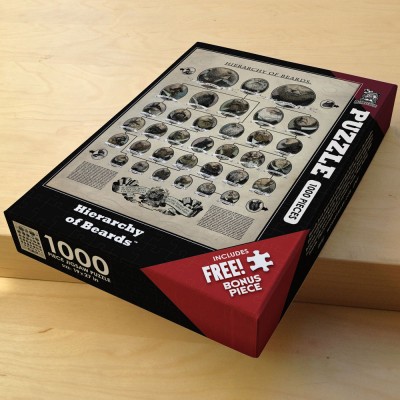
Malki’s book Beards of our Forefathers had been nominated for a real Eisner, for “Best Humorous Publication.” The unofficial Eisner win is the first for Malki, although he also won an unofficial Ignatz for “Wondermark” after being nominated in 2007.

“I am humbled to accept this award in lieu of the actual, real-life Eisner, which was held over my head high enough that I could not reach it even if I jumped as high as I could, and they would not let me bring a ladder on stage, even though I had brought one with me,” said Malki in a prepared statement to an invisible audience of spirits.

The unofficial Eisner statue is a miniature bottle of Purell hand sanitizer, which Malki proudly displayed at his booth for the remainder of Comic-Con.

“It’s much lighter than the official Eisner, with a bit more utility as well,” Malki added.

Reached for comment, the imaginary ghost of Will Eisner said “Bluuooooooghhh,” then rattled the chains that hung draped from his body.

Writing: That Old Toronto Magic

old city hall!
photo by swisscan on flickr

I stepped off the airplane and followed the signs, in French and English, the way they do things in Canada. The hallway fed into a giant empty room, thick with winding amusement-park railings full of nobody, the booths at the far end staffed with Valkyries, or bored Customs agents, or trolls — who could say? A stamp and I was through. Canada. I was here.

“Your speedometer’s in kilometers first, then miles smaller,” I told Ryan as his car pulled us through normal-looking streets. I could see why everything filmed in Toronto; it looked like any other American city, what with its traffic lights, sidewalks, and correctly-shaped humans. “That means that somewhere, in some factory, there are American versions of cars being made, and Canadian versions of cars being made.”

“The placard is integral to the frame of the car,” he nodded. “The whole chassis has to be re-tooled to fit the appropriate placard.” He put on his turn signal. It sounded like an American turn signal — but was it?

To most Americans, Canada is a concept. It’s a punchline, a hockey-loving moose-preserve with free health care and an infestation of the French. Anyone who professed a desire to “move to Canada” around some election or other clearly saw it only as non-America, as a place defined by its not being someplace else.

“Did you ever hear of the Walkterton scandal?” Ryan asked. It is news that did not make it to America, so busy are we with our own problems.

“No,” I said, and suddenly I realized we were flying.

Ryan moved the steering wheel and the car banked, dipping sharply into the air and describing a large arc across wide-open sky. Before us were the buildings of the downtown core, and beyond that, the twinkle of Lake Ontario; the CN Tower jutted into the sky like a syringe full of nourishing, bagged milk.

It was astonishing. It was beautiful. It was the glimmer of scales falling from my wide American eyes.

“There is so much we don’t know about Canada,” I gasped, and Ryan laughed.

“Sometimes,” he smiled, reaching into the back seat and handing me a brilliant red maple leaf, shot through with veins and shocking and surprising and real — “sometimes, we like it that way.”

Rough sketches for ‘Return’ cover

When I sat down to design the cover for Return to Wondermark Manor, I didn’t have a clear picture in my mind of how I wanted it to look. So I sat down with some oversized paper and just started sketching layouts with a ballpoint pen.

started kinda scribbly

the spooky logo

This is a great technique for unclogging your thinking. I knew I wanted to fill several sheets of paper; there was no sense in leaving any blank space. I didn’t know what I wanted the thing to look like, so I couldn’t call anything right or wrong. I focused simply on filling up pages with as many different designs as I could come up with.

this one has axes!

top left has like an eagle or something

Around page two or three, I started to get excited. Seeing designs sketched out helped upgrade this from some nebulous “project” in my imagination into an actual, physical book. It was starting to crystallize into something concrete. I visualized the designs that I’d drawn as fully-complete covers, as if I were holding the finished book in my hands, and gauged my reaction accordingly. What did I like and not like? Which designs and what visual elements were I responding to?

bottom right reminds me of an Indiana Jones logo

After I’d filled several pages in a bit of a frenzy, I began to peter out of ideas. That was okay, though; I had a really good start on some interesting designs. I set the whole stack of paper aside for a while.

When I paged through it again a few days later with fresh eyes, one unusual design stood out to me. I don’t know why, but I was really drawn to the asymmetry of the diagonal-slash composition on this page:

FINALLY

That basic layout became the foundation of the final cover. I didn’t follow the sketch exactly, but it gave me a place to start, a ramp to get my motor running. When I do a design project I usually have to start without knowing exactly where it’s going — trying to plan too much ahead of time can overwhelm me, and I never get anything done. But if I just hunker down and start playing around, usually I’ll figure out what I’m doing after a while and then I’m off to the races.

Here’s the final design (click for bigger):

I did not bother to sketch out the back cover

p.s. I tried to work “the sketches popped my creative clutch” somewhere into that whole description, but it sounded dirty so I nixed it

Dear Internet. It is strange.

up high
(photo by night86mare on flickr)

Dear Internet,

It is strange. I am on an airplane and I am not quite fully there, in the way that you get when every hundredth second or so you realize that you have fallen asleep, and you wake and the world changes. You realize that a moment ago, you were wrong about everything. Sunlight filters through the windows carving strange shadows on the black aisle floor — with my head canted on the headrest, the moving lines convince me that there is a dog on the airplane.

Sometimes I think the dog is going to be crushed by the stewardess, but it never is.

With my ear against the headrest, the entire airplane resonates. I bring work onto airplanes, my dear Internet, but it is impossible to think in here. Even watching television becomes a chore. Since when has watching television been a chore? Since we started to feel compelled to appreciate things. I do not like wasting time. I do not like watching things that I cannot appreciate. Everything is exhausting, now, even watching television. This time, I can’t manage it.

I sometimes come up with story ideas on airplanes, but they all revolve around airplanes and the circumstances of being on them. When I get off the plane my ideas all involve the struggles inherent in the airport parking lot. I am awash in newness and difference, and then, inevitably, along the long length of Lincoln Boulevard I am lowered slowly back into the same half-finished life from before.

Maybe I will not fit into it anymore! Maybe I have changed from my trip. But the life is like pants that have never been washed, Internet. It keeps its shape. Although it does, over time, become softer.

I like the idea of airplanes. I like going high, and fast, and becoming a guy who is in a different place. When I was a kid I used to imagine that maybe every time I got onto an airplane, vast crews of people leaped quickly into action tearing up roads, deconstructing the false fronts of buildings I’d never been into, and replacing it all with, say, Spokane. The plane would just stay up for as long as it took for all the work to be finished.

I don’t really think this anymore, but I don’t know that it’s any more fundamentally ridiculous a notion than what actually goes on. The difference is mainly in my decreased conception of my own importance in the world.

But I am uncomfortable with the airplane as a device for removing me from a place where I have changed, and reshaping me to fit the place I vacated. I think they do it with the rumbling. The rumbling is what breaks down all the molecules. The vibration allows them to settle.

Why am I talking in this melancholy manner to you, my good friend Internet? I have just read a book by Joey Comeau entitled Overqualified. It has wrapped me in its pages and made me mimic it. It is a thing that happens sometimes with me and books, because of chemicals in my brain. The book made me think of things, and then my brain did something with chemicals. I am not totally clear on the details but I think that is probably okay. I doubt I will be asked to explain it to a class or anything. There is not much I could teach children about it.

I mean, I could probably say “Forget that idea that your brain makes you feel things. You make your brain feel things, and then your brain does something with chemicals.” Then I would sort of halfheartedly shrug. Maybe I would add “Most people do it backwards.”

I do not mimic your work out of irreverence, Mr. Joey Comeau of Canada. I like things that surprise my brain into doing the chemical thing. So I figured if I must be shaped into something by this high, fast, gently-quivering softening chamber, I may as well try to make it something that surprises me.

Yours,

David Malki !

Overqualified

(Buy Joey Comeau’s Overqualified from Amazon,
or from an independent bookstore)